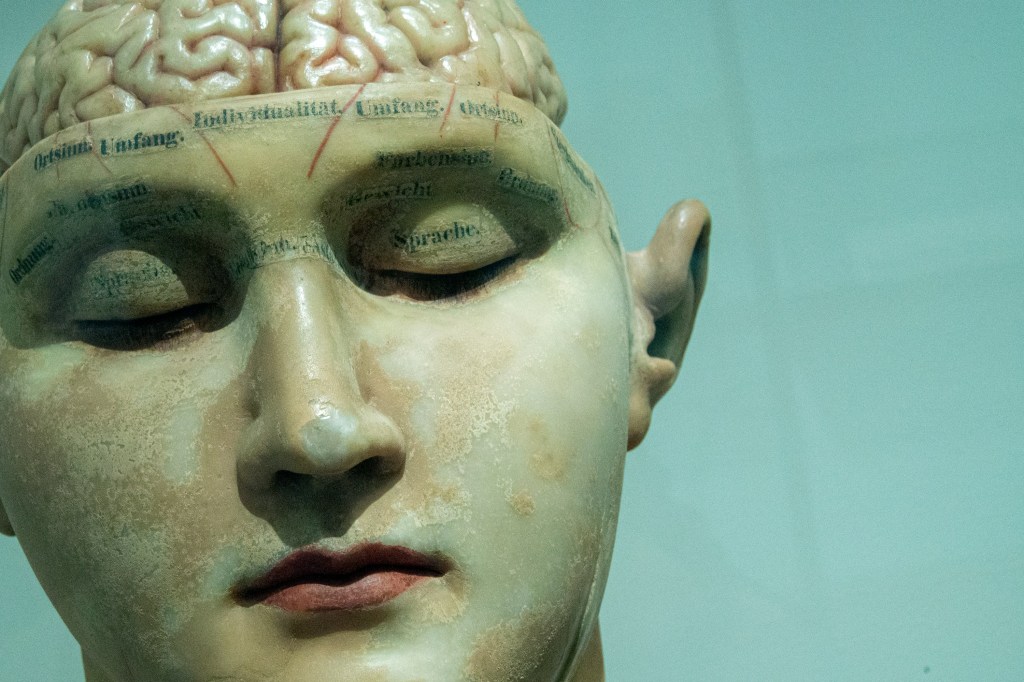
Your brain is an exceptional organ. Weighing in at around 1.4kg (a little heavier than a bag of sugar), with 86 billion neurons, or brain cells, and around 100 trillion connections, it far exceeds the capacities and capabilities of the most sophisticated supercomputers.
It’s also a very greedy organ, consuming around 20 percent of your body’s energy. But, unlike muscles that consume significantly more energy when active, the brain’s appetite remains remarkably steady, rising only around 5 percent during increased mental activity, such as when we’re carrying out a complex mental calculation. Your brain might be resource intensive, but it handles those resources incredibly efficiently.
The brain uses most of this energy to transmit information, a process known as synaptic signalling. This is where all those 86 billion neurons speak to each other. Neurons are like tiny batteries, electrical devices that communicate with one another via electrical events called action potentials. Neurons don’t touch each other, but there is a tiny junction between them called a synapse. The action potential results in the release of neurotransmitters, chemical messengers that carry different types of information from one neuron to another. They can both help (excite) or hinder (inhibit) the receiving neurone from firing its own action potential. Common neurotransmitters include dopamine and serotonin.
All this synaptic signalling results in connections between neurons, connections that form a vast web of information. The more we repeat an action, the stronger the individual connections become. Conversely, the less we repeat it, the weaker the connection. Some connections might even eventually break if the connection is rarely activated. Actions can be pretty much anything, like learning chord progressions on the guitar, memorising times tables, or French vocabulary. But also everyday tasks like engaging in conversation, remembering the way home from work, or washing the dishes.
What makes this process powerful is the ability to reorganise the structure, functions, and neural connections of the brain across the lifespan. The structure of the brain is therefore constantly shifting and changing in response to stimuli (such as learning something new), and to damage. This is an ability referred to as neural plasticity. The brain is never static; everything we do will change it in subtle ways. You may have seen headlines on mainstream and social media declaring that playing chess alters the structure of the brain. This is certainly true, but it’s equally true that doing pretty much anything will cause the brain to change.
It remains an unfortunate reality, however, that our brains slow as we age. Learning new things becomes more difficult, and most of us will experience a decline in our cognitive abilities. This mild cognitive decline is a natural part of the aging process, but scientists are learning more about the process of mental decline every day. The more we understand how and why it happens, the better placed we are too slow and even reverse its progress.
Grow your brain
How resilient our brains are to this downturn depends on several biological and social factors. Genetics plays a role, but so do lifestyle and educational background. We know, for example, that people who engage in education for longer not only increase their longevity but also have a higher healthy life expectancy (or the number of years we are expected to live in good health). The reasons education has such an impact are, themselves, multifaceted. Higher educated individuals can often make more reasoned lifestyle choices (such as healthy eating, exercising, and refraining from smoking and heavy alcohol consumption). But learning also adds to what scientists call cognitive reserve.
Cognitive reserve pertains to how agile our brains are, such as the ability to find alternative ways to accomplish a task and cope with challenges. Cognitive reserve theory also attempts to explain how life-experiences, complex occupations, and social engagement build brain resilience, allowing individuals to maintain cognitive function despite brain damage or aging.
We build cognitive reserve primarily through learning, not simply because learning adds to our store of knowledge, but because learning and engagement in cognitively stimulating activities, builds a more efficient and resilient brain.
How to increase cognitive reserve.
Cognitive research is most related to learning. But that’s not the only factor. There’s certainly a genetic component, including the role of intelligence, but cognitive reserve is also about social and emotional connection, and physical activity. This following list isn’t exhaustive, but may provide a starting point.
Reading.
Reading provides a myriad of cognitive benefits. First, reading widens our vocabulary and literary confidence, helping the brain create meaning from the written word. Reading also increases our general knowledge. We might, therefore, learn something new about the world in which we live, grapple with complex ideas, or learn about how to become more healthy. Fiction nurtures imagination and curiosity, which are the major building blocks of knowledge and understanding. Both fiction and non-fiction can increase what learning science calls metacognition, or learning how to learn, solve problems, and think critically.
Visiting museums, art galleries, or attending concerts.
Such activities are said to add to cultural capital, making us more aware of what our culture (and other cultures) deem important for a successful life.
Playing games.
Children often learn through playing games, but adults can also benefit. This might be traditional games such as chess and games of chance, but studies have also found that older people can increase brain function through video games, particularly in brain regions associated with processing speed, reaction time, and spatial awareness.
Skills learning.
A plethora of studies have found that learning a skill (everything from playing a musical instrument to juggling) can slow and even reverse mild cognitive decline.
Physical activity.
Walking, running, yoga, and aerobics keep the heart and cardiovascular system in good shape, ensuring that the resource-hungry brain continues to function optimally.
The social connection.
Regular social contact can have a major impact on the brain, and consequently on longevity and healthy life expectancy. Thankfully, many of the suggestions above can take place in a social setting. You might, therefore, attend an evening class to learn a new skill, socialise during an aerobics class, join a running club, or even form a band.
There’s a certain paradox to growing older. The general view remains that as we age, the body and brain slow down, and we need to take it easy. There’s also the misguided view that by the time we reach our fifties or sixties, we’ve pretty much learned all we need to. But if we intend to stay mentally sharp and physically agile in older age, the opposite is true. We still need to learn, stretch our brains, and test our bodies; only then can we fully enjoy our later lives.


 The Emotional Learner
Leave a comment