
The question is more complex than you might think.
First, we need to ask if memories are stored at all. The brain isn’t a movie camera, or even a filing cabinet! Recalling a memory involves the reconstruction of the original event. Memories are never accurate, no matter how much we think they are. We add things, embellish others, fill inevitable gaps with what seems plausible.
That said, we know that the brain changes in response to learning things, so we must be putting this new information somewhere, right?
Take, for example, a series of studies conducted by neuroscientist Eleanor Maguire. Maguire set out to investigate the brains of London taxi drivers. The UK capital’s cabbies are required to pass an incredibly gruelling test (known as The Knowledge) if they are to be granted a licence to operate one of the city’s distinctive black cabs.
Maguire discovered that the brains of those who successfully completed The Knowledge had changed between beginning and completing the course. Most notably, the hippocampus (an area of the brain most associated with memory) was larger.
Many other studies have discovered that the brain changes in structure when we learn (known as neuroplasticity). If we learn a new language, for example, we also see an increase in hippocampal volume. But we also see cortical thickening (or brain growth) in the Inferior Frontal Gyrus, an area involved in the mapping of new words.
There does appear to be important role here for the hippocampus and you might think this is where all your memories are kept.
But it’s slightly more nuanced than that.
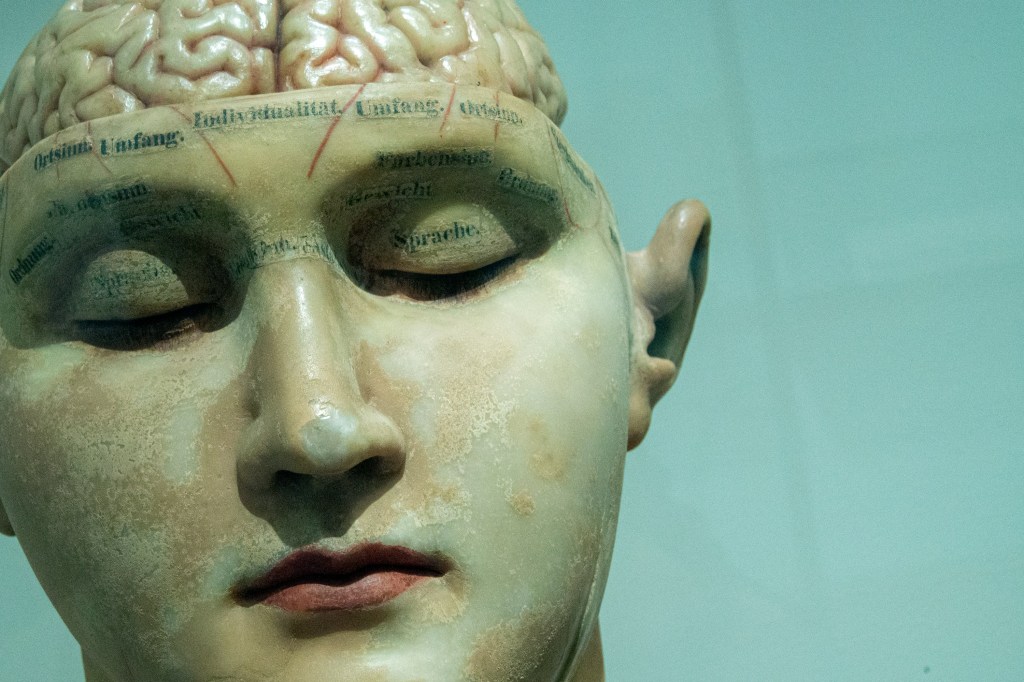
Whether there is a specific part of the brain that specialises in certain memory functions is a topic of some debate. There are currently three main theories as to how the brain stores memories.
Localisation.
The localised theory of memory suggests that specific memories (or types of memory) are located in discrete, identifiable brain regions, such as the hippocampus.
According to this view, memories are contained within engrams and localised circuits. An engram, first proposed by Richard Semon in 1904, is believed to be a basic unit of memory, the activation of which induces memory retrieval.
Recent research using a technique called optogenetics has identified potential specific neurons and circuits that appear to be involved in storing particular memories, but the search for the elusive engram still occupies the time of many neuroscientists.
Distribution.
The distributed theory of memory posits that memories are spread across networks and involve multiple brain regions. Karl Lashley conducted a series of studies on rats in the mid-twentieth century in an attempt to find where in the brain memories are situated. Despite his best efforts, he found no area of the brain specific to memory. From this, Lashley concluded memories were a product of mass action, relying not on a single region but the overall functioning of the brain.
Connectionist models based on artificial neural networks also assume memories are stored as patterns of connections. In this respect, the loss of a single neuron won’t lead to the loss of any memory.
Current AI models also adopt a connectionist view.
Hybridity.
The prevailing wisdom adopts a hybrid approach, with local circuits contained within distributed networks. This means that while specific aspects of memory might be processed and stored in localised circuits, such as the hippocampus forming new memories while the amygdala stores emotional memories, the complete memory is distributed across a network of regions.
For example, sensory details of a memory could be stored in sensory cortices, while emotional content is stored in the amygdala. Overall coherence of the memory is then managed by the hippocampus.
In Maguire’s taxi driver study, we see evidence of localisation, in that the brain region associated with spatial navigation and memory is significantly larger. However, procedural aspects of navigation, such as driving skills, likely involve other regions, such as the basal ganglia and the motor cortex. We can then interpret these findings at a localised, distributed, and hybrid level.
This may also be the case for different types of memory, such as episodic (our memories of events) and procedural (skills, such as riding a bike), and different stages, such as encoding and retrieval. For example, encoding (when the memory is transformed into a state that can be stored) might involve more localised processing in the hippocampus, while long-term storage could be distributed across the cortex.
This also goes some way to explaining how people can acquire impairments in short-term memory but maintain long-term memories and procedural memories, situations often found in dementia and brain trauma.



 The Emotional Learner
Leave a comment